How large is the Russian-speaking community in Massachusetts?
The Census gives us a reliable minimum. Immigration history, bilingual households and a second generation show that the broader Russian-language community is considerably larger.
The estimates deliberately distinguish measured home-language data from the larger population that can speak, understand, or consume Russian-language content.
Why one Census number is not enough
The American Community Survey asks what language a person speaks at home. It does not simply ask whether someone can speak Russian.
Bilingual people can disappear from the Russian-language count.
Someone who grew up in Moscow, Kyiv, Minsk, Tashkent, Riga or Almaty may speak Russian fluently but now use English at home. A U.S.-born child of Russian-speaking parents may understand Russian perfectly and still live in a household reported as English-speaking.
Greater Boston is the center of the community
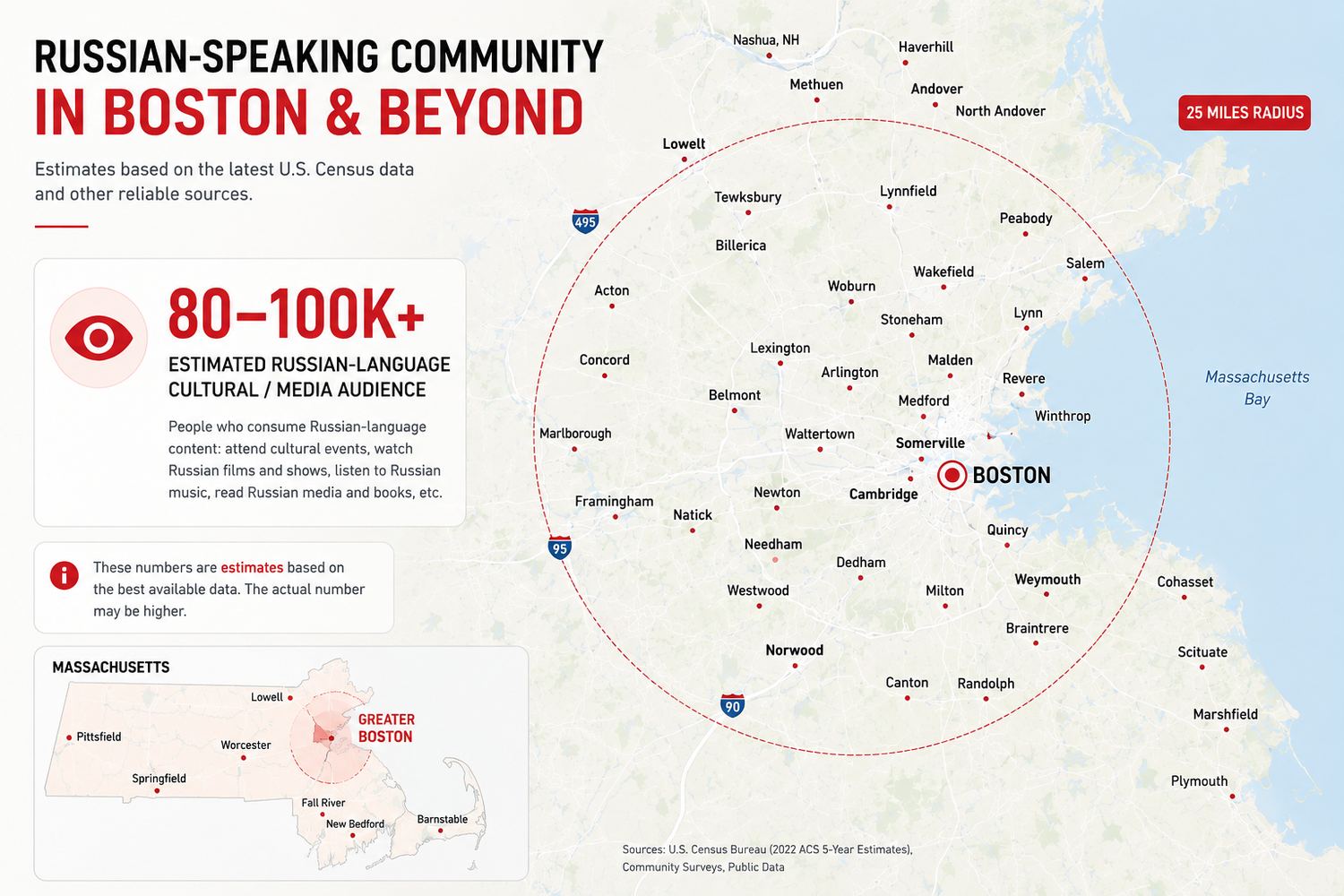
Greater Boston is home to the largest concentration of Russian-speaking residents in Massachusetts, with established communities in Boston, Brighton, Brookline, Newton, Cambridge, Waltham, Watertown, Sharon, Needham, Natick, Framingham, Lexington, Arlington, Belmont, Medford, Malden, Quincy, Braintree and communities across the North Shore, South Shore and MetroWest. Russian-speaking populations can also be found around Worcester, Springfield, Westfield and other parts of Massachusetts.
Russian-speaking does not mean Russia-born
Massachusetts' Russian-language population was built by migration from across the former Soviet Union, Israel, and by later generations born in the United States.
More than 30 years in the making
Today's community is the result of several migration waves, not one recent influx.
The foundational post-Soviet wave
The collapse of the Soviet Union brings a major wave of immigrants from Russia, Ukraine, Belarus and other former Soviet republics.
About 35,000 Russians estimated in the Boston area
Contemporary reporting described a rapidly expanding community, with Brighton, Brookline and Newton among its best-known centers.
Community infrastructure takes root
Businesses, media, cultural organizations and social networks mature. The population becomes increasingly established.
The community diversifies
Immigration continues from across the former USSR while the children of the 1990s immigrants become adults.
A new migration wave
War and political upheaval bring new Ukrainian, Russian and Belarusian arrivals, adding another layer to an already mature community.
How we built the estimate
We separate directly measured data from reasonable demographic inference.
Language at home
Use ACS Russian-at-home data as the hard minimum.
Birthplace and immigration
Add context from Russia, Ukraine, Belarus, Moldova, Central Asia, the Baltics, Israel and other former-USSR populations.
Second generation
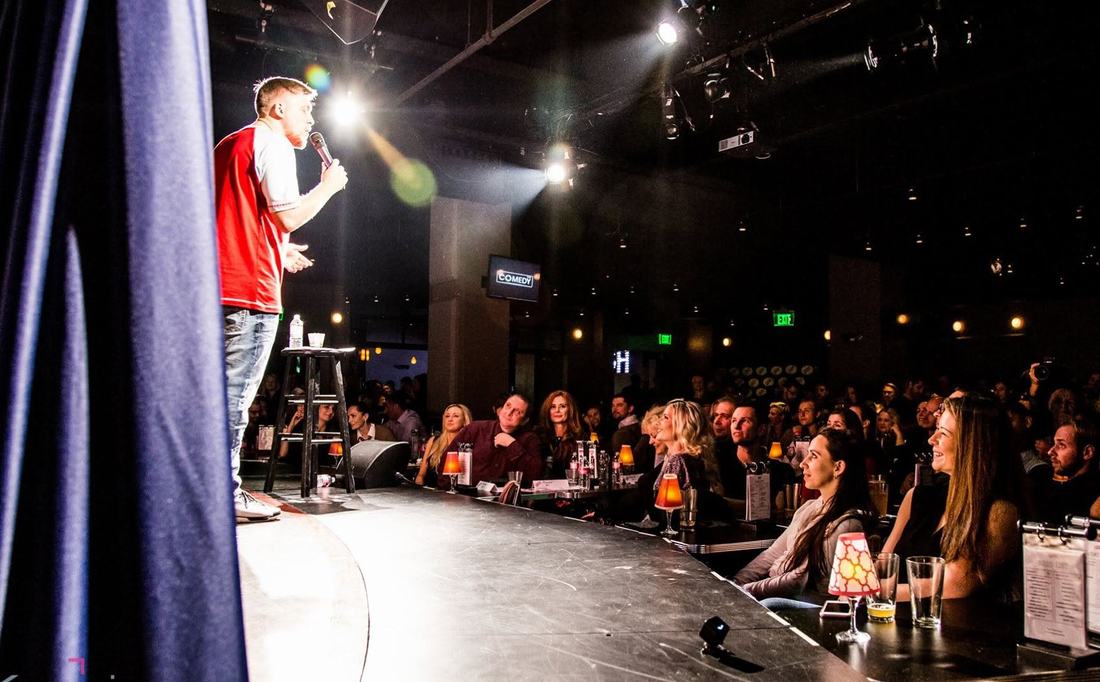
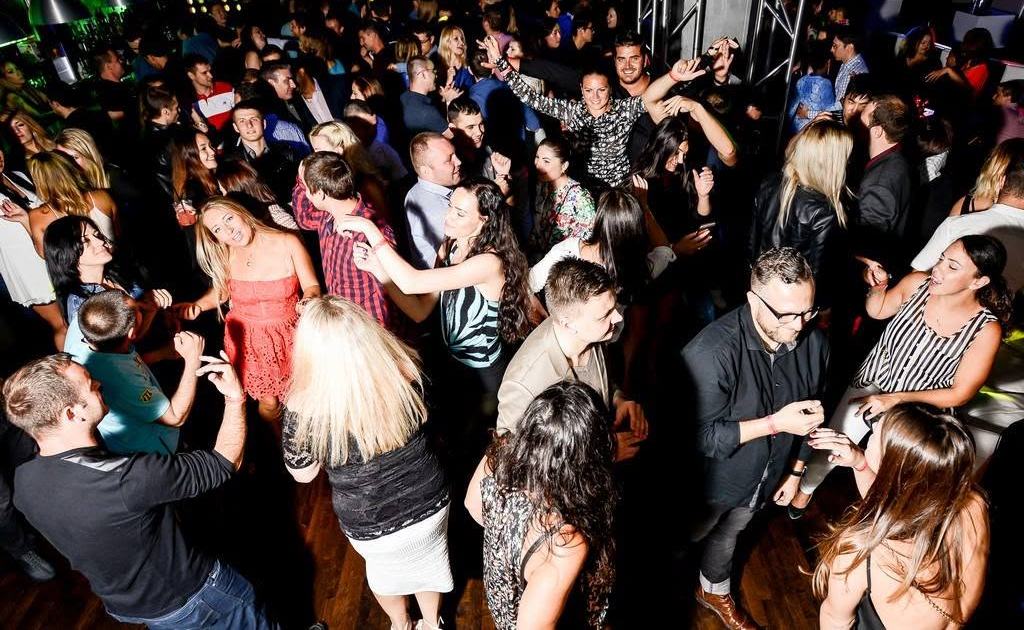
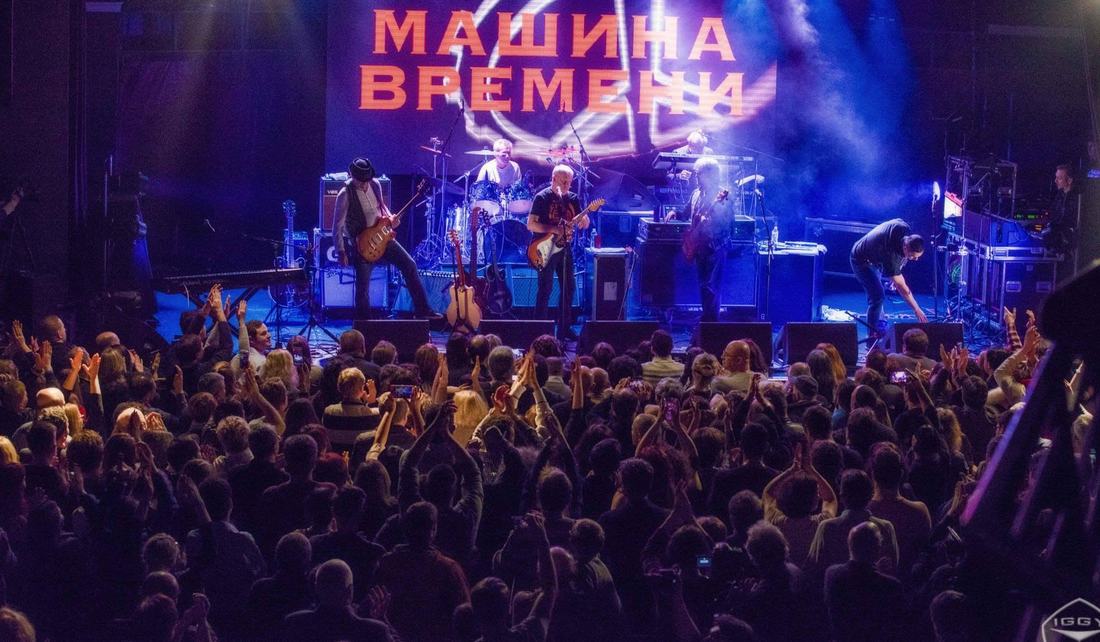
Account for U.S.-born bilingual adults and children who can consume Russian-language media without reporting Russian as their primary home language.
A reasonable working estimate for the potential Russian-language audience in Massachusetts.
This is not an official Census count. The safest formulation is: more than 40,000 Massachusetts residents speak Russian at home, while the broader Russian-speaking and Russian-language community is estimated at roughly 80,000 to 100,000 people.
Sources and methodology notes
- U.S. Census Bureau, American Community Survey, language spoken at home, including Table B16001.
- U.S. Census Bureau, American Community Survey, foreign-born population by place of birth, including Tables B05006 and C05006.
- Migration Policy Institute, Massachusetts state language and immigration profiles derived from ACS data.
- The Christian Science Monitor, 1994 reporting on the rapid growth of the Russian community in the Boston area.
- Historical Boston-area community studies and contemporary reporting used to contextualize migration waves and the development of the second generation.
Methodological note: 70–90K and 80–100K+ are analytical ranges rather than official Census estimates. They describe the broader Russian-language-capable and culturally addressable population, not only residents who report Russian as the language spoken at home.